

各位朋朋好,我是Kiki~~~
上次分享完人在台灣的海外接案經驗後,收到蠻多迴響,有些朋友表示多了一點信心,但也有不少人告訴我,就算英文基礎不錯,要真的跨出那一步,跟國外客戶書信往來、開會對談時,總還是覺得卡卡。怕用詞不對、顯得不夠專業,或是聽錯對方的意思。
會有這樣的顧慮,不僅僅是因為沒在全英文環境生活過而產生的心理壓力,也有一部分是因為對海外接案流程不熟悉,所以連客戶應對、該怎麼問問題都不清楚。
今天就來分享一下我自己實際經驗的完整的接案流程,以及在流程中每個階段用得到的英文句子,和特殊合約用詞,讓大家跨出心理舒適圈!
一、完整接案流程
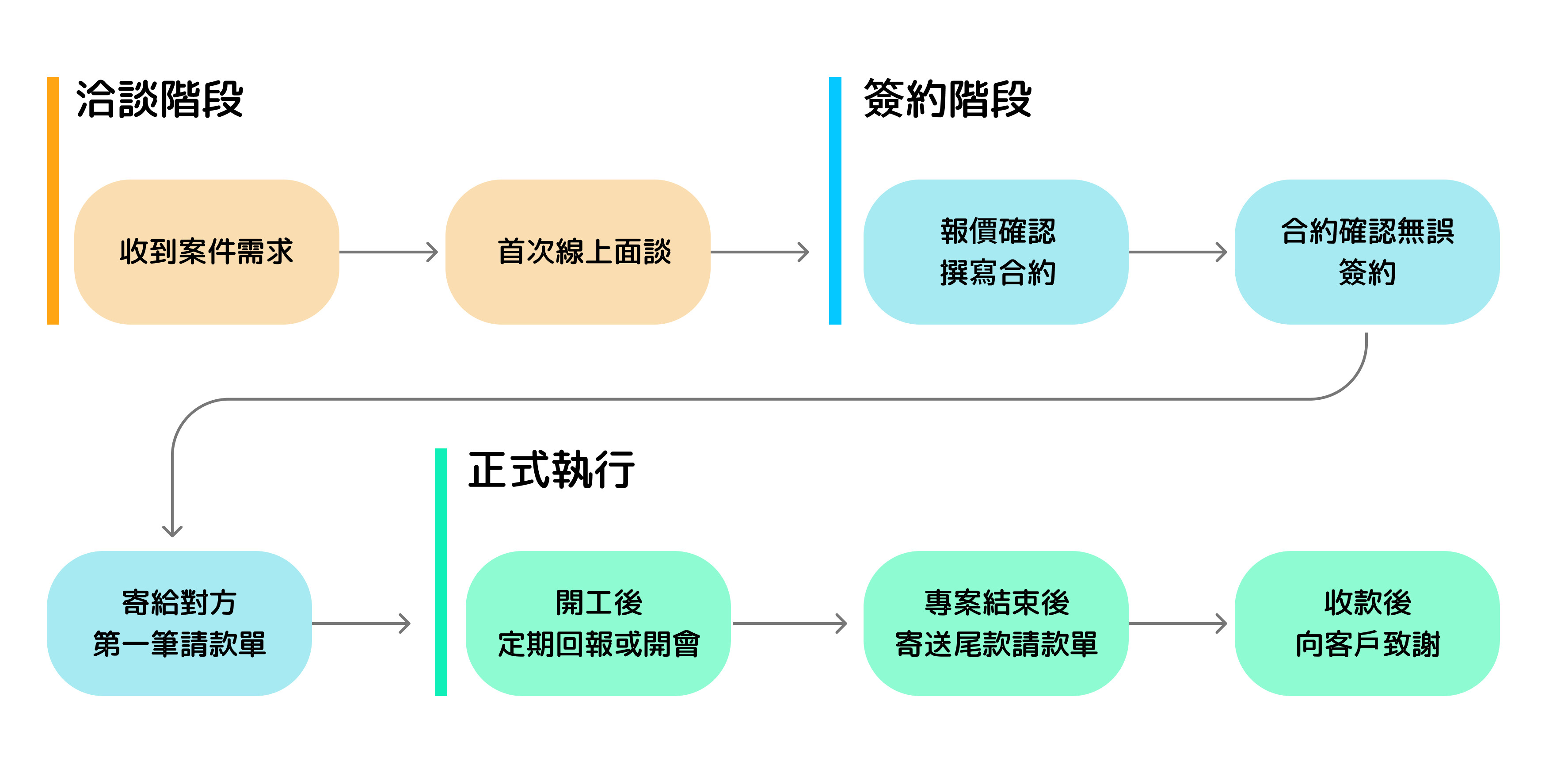
洽談階段
收到案件需求後,評估是否進入細節討論,或是婉拒
在線上面談中了解客戶需求,面談後透過eamil提供詳細報價,或是先請客戶補充更多資料再報價。
簽約階段
合約內會明定服務內容、所有權歸屬、付款規則及方式等。需要跟客戶確認由誰撰寫合約,來回可能會修改很多次。
合約確認無誤後,通常是採用線上簽約的方式。
接著就可以寄給對方第一筆請款單(invoice),收到頭款後才開工。尤其是遇到完全不熟的客戶,先收頭款才有保障唷!
正式執行
開始執行後,會先召開初次專案會議(kick-off call),接著通常是透過email或是Slack保持聯繫。
製作完成,客戶確認交付物(deliverables)無誤後,就可以寄送尾款請款單,讓客戶付錢錢啦!
收款後別忘了向客戶致謝,持續保持聯絡
我認為接案過程重點要盡可能放在掌握專案細節、問對問題讓專案可以持續進行,而不是在煩惱英文遣詞用字上,因此必要時我也會借助AI的力量,協助撰寫回覆。
二、各階段實用英文用句
1. 收到案件需求洽談
有興趣,直接排面談時間:
Thank you for reaching out to me! I’d love to hear more details about this project. Feel free to book a meeting here: [貼上會議連結]
先讓客戶了跨時區合作現況和遠距工作的專業,建立信心:
Hi I’m currently based in [城市] ([時區]) and have extensive experience working remotely with international clients, so collaborating across time zones is not a problem.
有興趣但目前沒空,需要保留後續合作機會:
Thank you for reaching out and considering me for [職位/專案]. I’m genuinely interested! My current schedule is booked through [具體時間點], but I’d like to stay in touch and reconnect in [具體時間點].
有興趣但目前沒空,可以詢問客戶的時程規劃是否能夠調整:
My schedule is fully booked at the moment, but I'll be available after [時間] . Would that timeline work on your end?
2. 線上面談,了解需求
在進入線上面談時,我會先了解整體專案內容、優先順序、預算、了解一下我接下來會合作的設計團隊及回報的對象,以及最終交付物,確保雙方需求匹配:
了解自己的主要任務及職位:
What would my role and main responsibilities be on this project?
如果客戶的需求比較籠統,詢問接到任務後優先要解決什麼:
What are the top priorities for this project?
理解預算及時程規劃:
Do you have a budget range and timeline for this?
是否需要跟客戶現有團隊合作,要跟誰回報:
How would I be collaborating with your team, and who would I report to?
是否有指定以哪種設計工具製作:
Which tools should I be using? Figma or Photoshop?
了解客戶現有的設計執行方式:
Could you walk me through your current workflow?
確認交付物內容及格式:
What are the final deliverables?What format do you need the final files in?
詢問合理的修改次數上限:
How many rounds of feedback or revisions are you expecting for this?
3. 報價確認、合約撰寫、簽約
同樣是合約,在簽約之前要先要先釐清SOW(Statement of Work)與MSA(Master Service Agreement)、Contractor Agreement這三者的不同
SOW:我根據了解客戶需求後,著手規劃的服務內容細節及預估報價,有點類似台灣常見的報價單。
MSA:確定要承接後,由我這邊擬定的主約,明定智慧財權歸屬及更詳細的責任義務。
Contractor Agreement:由客戶擬定的主約
Contractor Agreement 或是MSA,由我和客戶擇一擬定就好,而SOW通常則作為附件的方式,附在MSA或是Contractor Agreement後供參考用。有時候比較小的案件,也可以直接簽署在SOW上,就當作是一種合約。
因此進入準備簽約環節後,可以先跟客戶溝通看看,是要由誰負責擬定合約:
客戶擬定合約還是你來擬定:
Would you like to send over a contractor agreement, or should I draft a Master Service Agreement (MSA) on my end?
提出合約修改需求:
I’ve reviewed the document and made edits only to the scope and timeline terms under [Budget and Timeline section] , everything else looks good to me.
要求增加條款:
Could we add a clause covering [詳細條款內容]?
客戶臨時加需求、超出原本範圍:
I want to make sure we're on the same page on scope. Anything beyond [原始範圍] will need a separate quote and timeline adjustment.
合約確認沒問題,準備電子簽約:
I’ve reviewed the agreement and everything looks good. I’ve signed it and attached it here. Let me know if you’d prefer a DocuSign version.
關於更多合約內容的細節及關鍵字,將在下篇撰寫更多細節說明!
4. 準備收取頭款開工
簽約完後就可以準備開工啦,這時候記得寄送你的第一張請款單(Invoice),先收取頭期款!
e-mail寄送請款單:
Now that the agreement is signed, I’m excited to get started! Please find the attached invoice for the deposit / downpayment.
準備召集專案啟動會議:
I’d love to schedule a quick kick-off call to align on a few things before we dive in, including [討論內容].
5. 開工後定期回報或開會
要用email或是Slack溝通:
Would you prefer we communicate over email, or Slack?
臨時要快速討論:
Are you available to hop on a quick call now?
或是明天討論:
Would you be able to sync tomorrow on the project details?
進度回報:
I have some progress on [專案]! Please see [簡報內容] for details.
突發狀況,時程可能會拖延:
We’ve run into an unexpected issue with [問題內容], and I’d estimate this could push the timeline back by [X days].
提前告知遇到的挑戰和嘗試的解決方案:
I wanted to flag a challenge early: [問題內容]. Here’s how I’m planning to handle it: [方案].
催資料時可以循序漸進,語氣一次比一次直接:
先確認客戶真的有收到上一封e-mail:
Just checking in to see if you’ve received my last email about [專案].
再追一次,請對方有空時傳資料過來:
I wanted to follow up, could you send over [專案] when you get a chance? I’d like to keep things on track for [時程].
最後通牒,如果不給資料會趕不上截止日:
Hi, just a heads-up: without [內容], I won’t be able to hit the [日期] deadline. Could you confirm when I can expect it?
6. 寄送結案請款單,等待收款
依照簽約內容的不同,我會每週寄送請款單收款,或者是統一到月底月結。記得任務完成後提供客戶你的交付物連結,並且記得寄送請款單
提供檔案連結:
All deliverables are available in this Google Drive folder: [連結]. Let me know if you have any question!
寄送請款單:
Attached is the invoice for [服務內容], totaling [金額]. Payment is due within [15] days (Net 15).
7. 收款後致謝,持續保持聯絡
收款結案之後,別忘了向客戶致謝,給客戶一個好印象讓他之後記得有案子就會找你!
It was a pleasure working with you. If you ever need help with [service] in the future, feel free to reach out!
結語
根據我實際經驗,在海外接案卡關的地方,不一定是因為英文不夠好造成的,而是不知道流程走到哪、該問什麼問題、工作經驗不足導致。先把流程熟悉,搞清楚自己的立場,再把對應的句型套進去,就會發現真正需要臨場反應的英文,比想像中少很多。
看到這裡,如果你還想了解其他更道地的溝通方式,或是簡單好用的慣用語,也別忘了收聽我們最新一集的podcast:EP12|英文不好也能海外接案嗎?外國客戶常用的職場英文與溝通潛規則,了解海外接案趣事吧!